
PAN is not an Indian version of the EIN application
If a U.S. customer or business account asks for an EIN, do not assume it is asking you to replace your PAN. Start by checking which legal person and which tax system the request concerns.
The Income Tax Department describes PAN as a ten-character alphanumeric tax identifier. It separately describes TAN as identifying persons or entities with tax-deduction or collection responsibilities.Income Tax India Neither is a personal U.S. SSN or ITIN.
Keep the PAN record of the applicant business apart from your personal record. Write the full legal name beside each document. For a sole business, company or partnership, explain the actual form of ownership rather than relying only on a brand name.
Save the U.S. requester’s field label and form instructions. A foreign tax-ID field, a U.S. EIN field and a responsible-party personal-ID field are different requests. Asking for clarification at this stage is more useful than paying for an unrelated number.
Name the entity before preparing SS-4
Are you requesting an EIN for an Indian entity with a U.S. tax need, or for a U.S. LLC you own from India? Give the preparer that answer and the supporting company record. Do not submit the U.S. LLC name alongside the Indian company’s formation date.
If an Indian company will own the U.S. entity, show that ownership explicitly. If you will own it personally, provide that version instead. Keep a record of other members and any planned change. The person answering the questions is not automatically the legal owner.
A foreign responsible party without an SSN or ITIN can use the applicable Form SS-4 instructions.IRS A PAN should not be entered as though it were a U.S. personal number. Check online eligibility using the actual principal business location.IRS
Prepare a reliable mailing address and an authorized contact. Keep the accepted entity record beside the application so spelling, dates and legal name can be checked before submission.
The India treaty is a separate income-tax question
The IRS publishes the India treaty and technical explanation.IRS An EIN does not establish your residence, classify a payment or approve a treaty benefit.
The India treaty has a specific Article 12 for royalties and fees for included services, and Article 15 for independent personal services.IRS treaty For an Indian software or consulting business, bring the scope of work and rights clauses. Whether you provide a service, transfer know-how or licence software is a better review question than “Is every U.S. client payment treated the same?”
For an Indian consultant paid by a U.S. client, retain the service contract and work locations. For a business selling products, retain supplier, production and sale records. For licensing, keep the rights agreement. Give the reviewer those facts alongside any tax-form request.
Do not choose a treaty rate simply because you have a PAN and Indian citizenship. Ask which recipient is claiming the benefit, what the income is and what eligibility evidence is needed. Keep that reasoning with the completed form.
If the payer asks an individual for W-8BEN, review the individual form guide. An entity’s form needs its own classification review. Neither request should be turned into a personal ITIN application without a federal tax purpose.
Track the money used to start the U.S. business
Make a funding ledger from the first transaction. Separate your investment, reimbursements, customer receipts and money returned to the owner. Keep the original transfer evidence with the explanation.
For a foreign-owned U.S. disregarded entity, related-party transactions can create a Form 5472 filing obligation with a pro forma Form 1120.IRS Have the reviewer assess the funding even if sales have not started.
Before funding the U.S. entity, discuss the overseas-investment route with your Indian bank. RBI’s regulations require a designated authorised-dealer bank and a UIN for a foreign entity where the investment is treated as ODI.RBI This UIN is not the U.S. EIN.
RBI’s Form FC instructions describe submitting the form to the designated bank when making the applicable foreign financial commitment.RBI Ask the bank to confirm the forms and sequence for your facts before transferring money. An EIN notice does not approve that investment.
Where equity investment is classified as ODI, the RBI rules also address evidence of investment and Annual Performance Report requirements, with exceptions.RBI Retain the ownership evidence and ask which ongoing reports apply. Do not assume that a U.S. company filing covers the Indian side.
Also keep the Indian and U.S. records readable together: original currency, recipient legal name, dates and transaction purpose. Avoid a spreadsheet showing only the final U.S. balance; it conceals the trail a reviewer needs.
Prepare an EIN request from India
- 1
Match the PAN and legal owner
Separate personal and entity records. Add the full business name and ownership explanation.
Identity - 2
Confirm the applicant
State whether the existing Indian business or a U.S. entity needs the EIN. Keep the correct formation evidence.
Company - 3
Prepare responsible-party details
Use the proper IRS fields and application method. Do not substitute PAN for an SSN or ITIN.
SS-4 - 4
Plan both countries’ reviews
Save the EIN notice, keep a funding ledger and ask for separate U.S. and Indian filing guidance.
Follow-up
Choose the next step with Nolly.com
Use the Nolly.com EIN service when the next step is the business tax number. Tell us whether you already have a company and whether an EIN has been assigned. That keeps a formation request separate from an EIN request for an existing business.
EIN registration
A U.S. tax ID for your company, even without an SSN.
Includes:
- Form SS-4 prepared for you
- Foreign address and owner handled correctly
- Filed with the IRS for you
- EIN confirmation letter sent to you
- Help by email and phone
Your questions answered
No. PAN is an Indian tax identifier. The IRS assigns an EIN for the business identified in the U.S. application.
Describe the actual ownership and entity documents to the preparer. Do not list yourself personally when the owner is the company.
No. RBI’s UIN concerns the foreign entity in the applicable overseas-investment process. The EIN is the IRS business identifier. Ask the designated bank about your investment route.RBI
A business EIN and an individual ITIN serve different needs. Establish the business filing first and review any owner filing separately.
More questions? See the full Nolly.com FAQ.
How we checked this
Every IRS fact on this page comes from IRS.gov or the other official pages listed below and was checked on October 3, 2026. Nolly.com's own prices are the only exception. Nolly.com is a private company and is not part of the IRS.
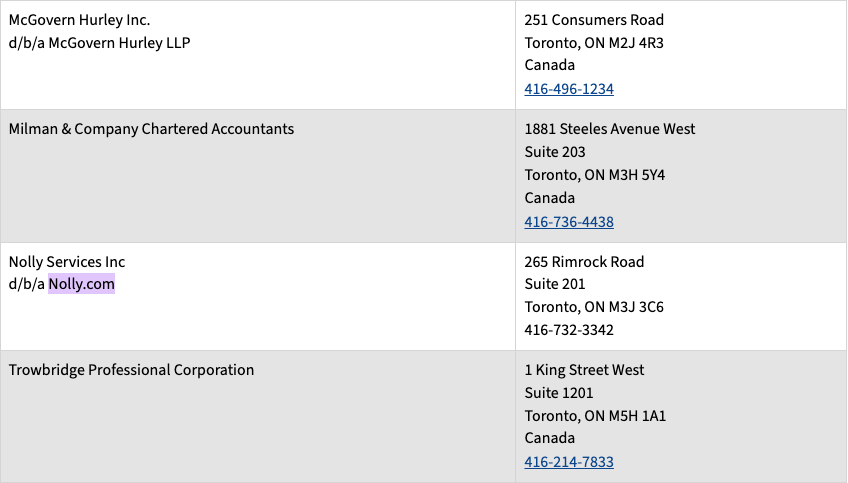
Nolly Services Inc, d/b/a Nolly.com, appears on the IRS page Acceptance agents – Canada. Nolly.com is a private company and isn't part of the IRS.
- Instructions for Form SS-4 (12/2025)https://www.irs.gov/instructions/iss4
- Get an employer identification numberhttps://www.irs.gov/businesses/small-businesses-self-employed/get-an-employer-identification-number
- U.S.–India income tax treaty: Articles 12 and 15https://www.irs.gov/pub/irs-trty/india.pdf
- Foreign Exchange Management (Overseas Investment) Regulations, 2022https://www.rbi.org.in/Scripts/BS_ViewMasDirections.aspx?id=12380
- RBI Form FC and instructionshttps://www.rbi.org.in/hindi1/Upload/Returns/PDFs/FORM%20FC7DF68A285653466B9DA18CEBEDCA3263.PDF
- Instructions for Form 5472https://www.irs.gov/instructions/i5472
- Income Tax Department: Permanent Account Number (PAN)https://www.incometaxindia.gov.in/en/pan
- India: tax treaty documentshttps://www.irs.gov/businesses/international-businesses/india-tax-treaty-documents
Checked against IRS.gov on October 3, 2026. General information, not tax advice.